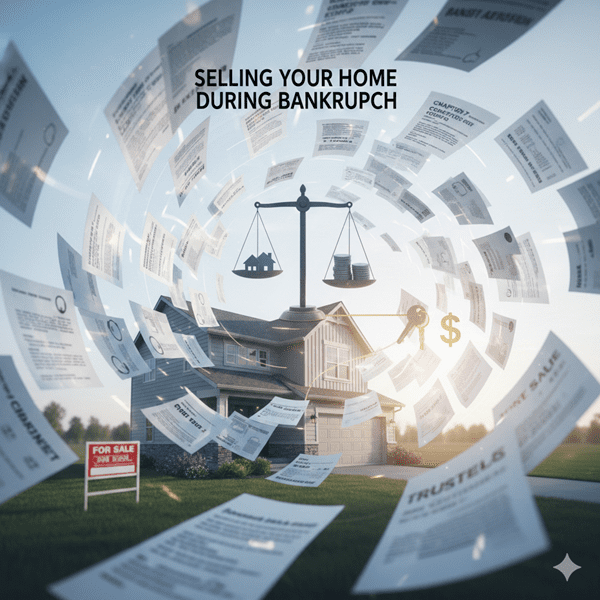
Can you sell a house while in Chapter 7 or Chapter 13 bankruptcy? Yes, but you need permission. Learn the steps to get Trustee approval and sell your home fast.
Selling Your Home During Bankruptcy: A Guide to Legal Permissions & Trustee Approval
Is it possible to sell your house while you are in the middle of a bankruptcy case?
The short answer is yes. The long answer is that it is not as simple as sticking a "For Sale" sign in the yard. When you file for bankruptcy, your financial life is placed under a microscope. Technically, you don't have full control over your assets right now—the Bankruptcy Court does.
However, selling your home is often a smart way to pay off creditors or exit a mortgage you can no longer afford. The key is understanding how to get legal permission to do it.
Here is exactly how the process works for Chapter 7 and Chapter 13 filers.
The Golden Rule: You Are Not in Charge (Yet)
Once you file for bankruptcy, your home becomes part of the "Bankruptcy Estate." This means a court-appointed official, called the Trustee, has the final say on what happens to it.
If you sell without permission:
- The sale can be reversed
- You could face fraud charges
- Your bankruptcy case could be dismissed
If you follow the rules:
- You can sell the house
- Pay off your mortgage
- Potentially walk away with your "homestead exemption" (cash for your fresh start)
Chapter 7 vs. Chapter 13: The Difference Matters
The process changes depending on which chapter you filed.
Liquidation
In Chapter 7, the Trustee's job is to sell your valuable assets to pay your debts.
✅ If you have equity:
The Trustee wants the house sold. They might even sell it themselves. If you bring them a cash buyer who is ready to close, they will often agree because it saves them the work of hiring a Realtor.
✅ If you have no equity:
The Trustee will likely "abandon" the property, meaning they release it back to you. Once they formally abandon it, you are free to sell it (or short sale it) as you please.
Reorganization
In Chapter 13, you are on a 3-5 year payment plan to keep your assets. However, life happens. You might need to move for a job or realize the payments are too high.
📋 The Process:
You can sell, but you must prove to the court that the sale price is fair and that you have a plan for the proceeds.
⏱️ The Hurdle:
It takes time (usually 30-45 days) to get a court hearing to approve the sale.
The Step-by-Step Guide to Getting Court Approval
If you are in active bankruptcy, you cannot just accept an offer and close next week. You must follow this strict legal workflow:
Step 1: Notify Your Attorney
Do not sign anything yet. Call your bankruptcy attorney and tell them you want to sell. They need to run the numbers to ensure selling actually benefits you after the mortgage and creditors are paid.
Step 2: Find a Buyer (Ideally a Cash Buyer)
This is where "We Buy Houses" companies shine.
Why? Bankruptcy Trustees hate risk. They do not want a buyer who might get denied for a loan at the last minute.
The Benefit: A cash offer with "zero inspection contingencies" is attractive to the court because it guarantees the deal will close.
Step 3: Accept the Offer "Subject to Court Approval"
You can sign the purchase contract, but your attorney must add a special addendum stating: "This sale is contingent upon Bankruptcy Court approval."
Step 4: The "Motion to Sell"
Your attorney files a Motion to Sell with the court. This document tells the judge:
- Who is buying the house
- The sale price
- Where the money is going (e.g., paying off the mortgage, paying the Trustee, paying you)
Step 5: The Creditor Notice Period
All the people you owe money to (creditors) get a notice in the mail. They usually have 21 days to object to the sale. (They rarely object unless you are selling the house for way less than it's worth to a friend).
Step 6: The Court Order & Closing
If no one objects, the Judge issues a Court Order approving the sale. You take this paper to the title company, and the sale closes.
What Happens to the Money? (The Homestead Exemption)
Many sellers worry they will sell their house and the court will take all the money. That is rarely true because of the Homestead Exemption.
Every state has a law that lets you protect a certain amount of equity in your primary home.
Example:
If you profit $50,000, you keep $30,000, and the Trustee takes the remaining $20,000 to pay your debts.
Note: Always ask your attorney what your specific state's exemption amount is before listing.
Why "As-Is" Cash Sales Work Best in Bankruptcy
When you are in bankruptcy, you likely don't have the extra cash to fix a roof or paint the walls to please a traditional buyer.
Trying to list on the open market (MLS) can be a nightmare because:
- Repairs: If a home inspector finds issues, you can't afford to fix them.
- Delays: If the buyer's financing falls through, you have to restart the whole court process.
Selling to a professional cash buyer solves both problems:
- The Trustee gets a guaranteed sale
- You get a hassle-free exit without spending a dime on repairs
Summary Checklist for Sellers
Call your bankruptcy lawyer before listing.
Ask about your "Homestead Exemption" (how much cash you can keep).
Get a cash offer to present to the Trustee (courts prefer certainty).
Ensure the contract includes the "Subject to Court Approval" clause.
Need a Cash Offer to Present to Your Trustee?
We have experience buying homes in active bankruptcy. We can provide the paperwork your attorney needs and the proof of funds the court requires.
Get Your Cash Offer NowMore Resources for Massachusetts Homeowners
If you're navigating bankruptcy and need to sell your home in Massachusetts, explore these related resources:
Sell My House Fast in Boston, MA - Learn about our quick sale process for Boston area homes.
We Buy Houses - Discover our cash buying program for Massachusetts properties.
About Us - Learn more about our company and how we help homeowners in difficult situations.
We serve homeowners throughout Massachusetts including: